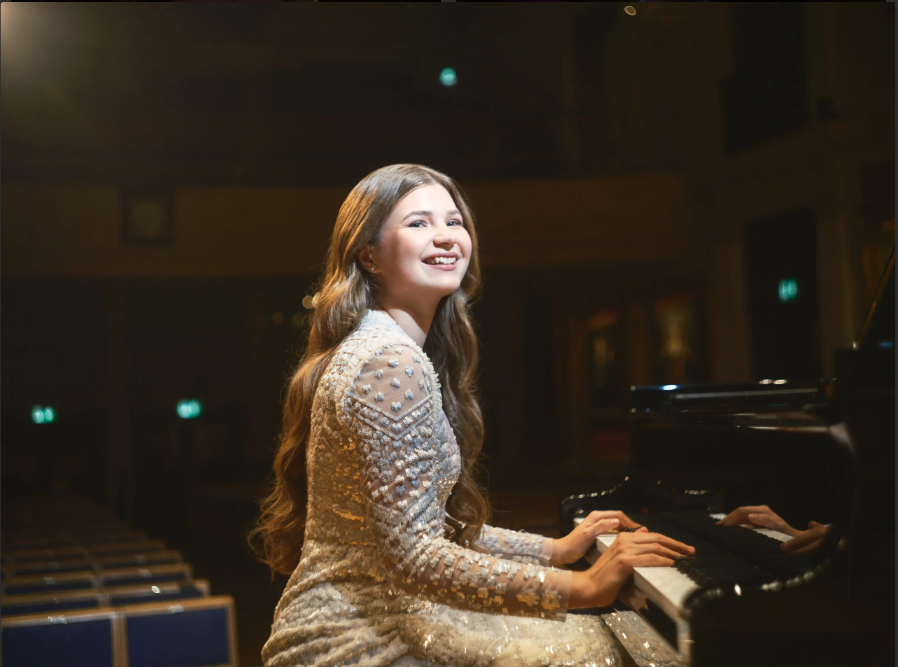
When pianist Khrystyna Mykhailichenko walks onto the stage at Brighton Dome this week, she will perform a work she has never played in public before.
That might seem surprising for a pianist who has been performing since childhood and has already tackled some of the most demanding works in the repertoire. But Rachmaninoff’s Rhapsody on a Theme of Paganini is a very personal first.
Mykhailichenko has long been fascinated by Rachmaninoff. She immersed herself in his music during the Covid lockdown, when cancelled concerts gave her an unexpected opportunity to spend months at the piano. Now, as she prepares to perform the Rhapsody for the first time, there is another extraordinary connection: she has recently stood inside the Swiss villa where Rachmaninoff wrote it, looking at the very manuscript she is now bringing to life.
“I have a bit of a story with this piece,” she says with a smile.
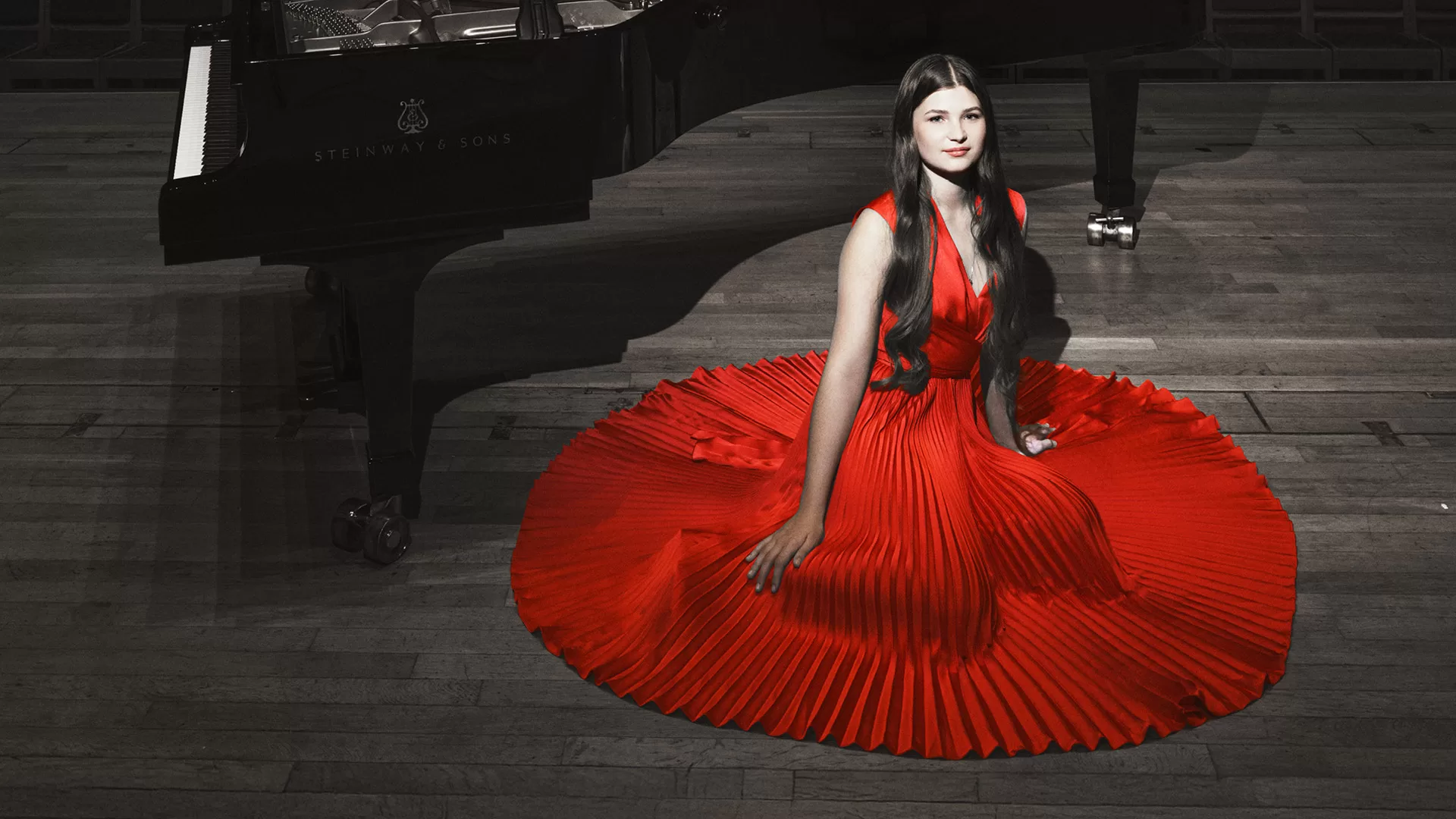
Born in Ukraine, Mykhailichenko’s relationship with music began almost by accident. Her grandmother was a piano teacher, and her mother had played piano as a child. But there was no expectation that music would become a profession.
Then a neighbour decided to sell an upright piano.
“My mum just thought that it would be nice to have an instrument at home,” Mykhailichenko recalls. “Maybe she could play sometime, or guests might come and enjoy playing.”
At first, the young Khrystyna showed little interest. Then, during a summer spent with her grandmother, she watched another child having a lesson.
“He was a year older than me, but could already play the piano,” she says. “So I thought, if he can play the piano, then maybe I can do this too.”
That small moment set the course for her life.
She started music school when she was five, alongside nursery and ballet classes. As her talent developed, music increasingly shaped her education. After her family moved from Crimea to Kyiv, she was eventually mostly home educated, allowing her to spend much of the day practising.
Looking back, she describes her childhood as extraordinary – but says it never felt particularly unusual at the time.
“I don’t think children take things as extraordinary at their age,” she says. “For me it was always just about music-making and piano playing.”
Her mother, she says, did an important job of protecting that childhood from the pressures surrounding a young performer, allowing her to concentrate on developing her artistry and discovering new repertoire.
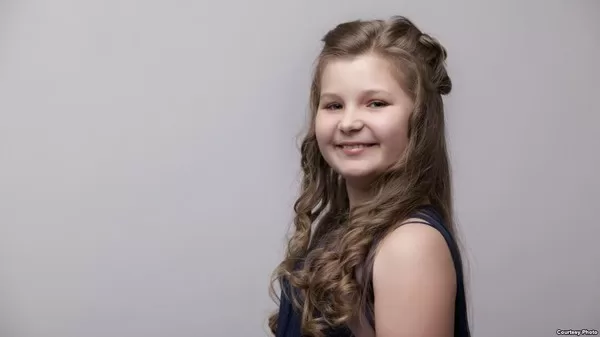
One of the most important figures in her early development was pianist and teacher Alexei Grynyuk. Rather than restricting her because of her age, he encouraged her ambitions, even when the repertoire she wanted to tackle presented formidable technical challenges.
“He never stopped me from learning something that I wanted to do,” she says. “I had some crazy ideas of what I wanted to play at a very young age, and he would always just say, ‘yes sure, let’s do it’.”
That freedom became an important part of Mykhailichenko’s identity as a musician.
And it was during another period when the normal rules of life were suspended that Rachmaninoff entered the picture.
When Covid brought the concert world to a standstill in spring 2020, Mykhailichenko found herself with no performances, no school and, unusually, no deadlines. She had a grand piano at home in Ukraine and decided to learn Rachmaninoff’s Third Piano Concerto.
“It was honestly the best time. I was so free. No commitments, no stress, no deadlines, no concerts, no school,” she recalls. “I just had the score.”
She spent much of that spring learning the enormous concerto. Performances planned in Ukraine were repeatedly cancelled as the pandemic returned in waves, and it was not until she moved to the UK in 2022 that she finally performed it in Newcastle with the Orchestra North East.
Her fascination with Rachmaninoff, however, had only deepened.
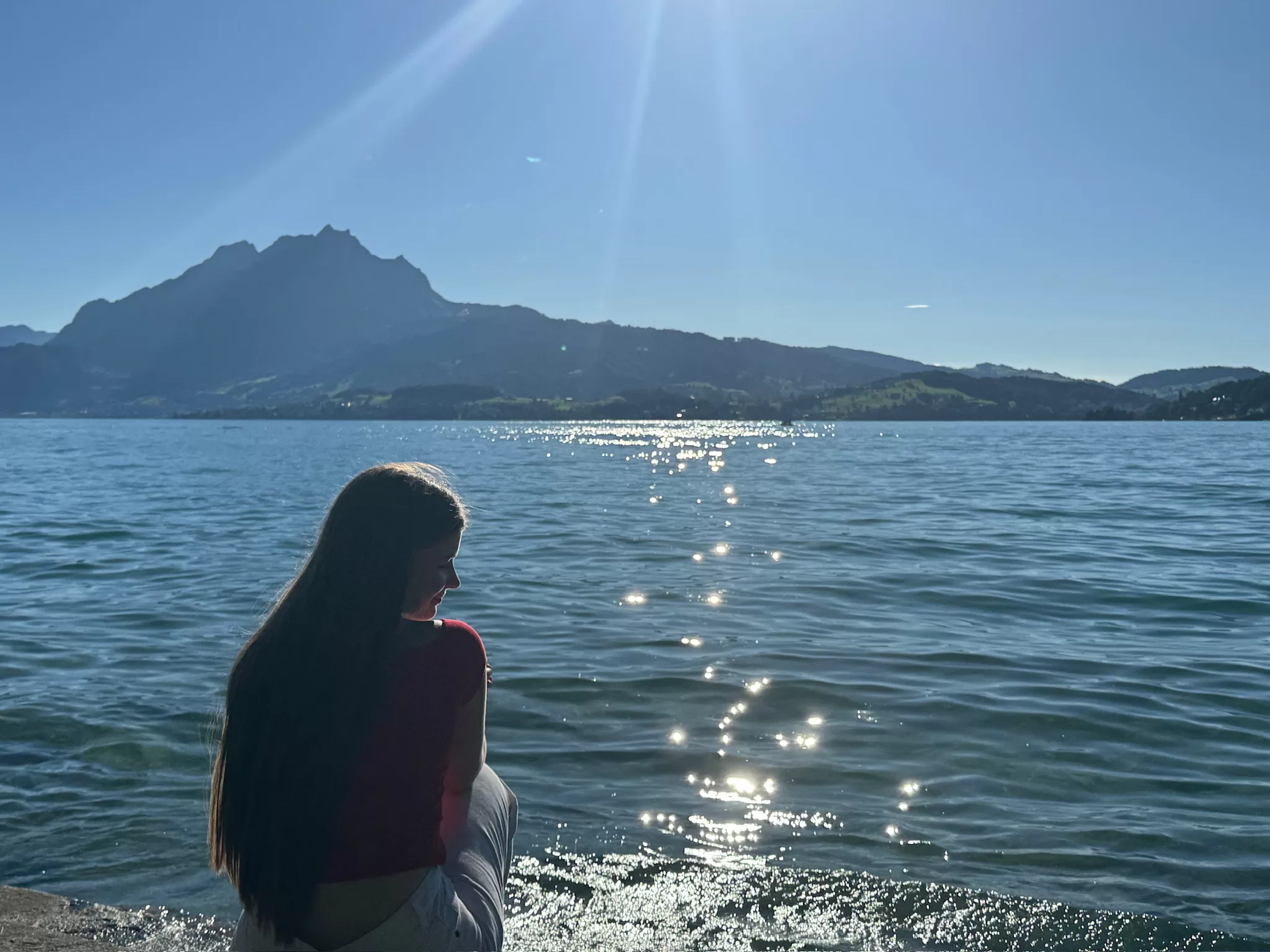
Last summer, while visiting Switzerland, she finally managed to visit Villa Senar, Rachmaninoff’s former home on Lake Lucerne – after being turned away twice on previous visits because it was closed.
Inside, she found the piano Rachmaninoff had used, his desk and photographs of his family. And on the desk was the manuscript of the Rhapsody on a Theme of Paganini.
“I remember just looking at it page by page, looking at his handwriting,” she says. “It was just incredible. I’d dreamt of visiting that villa for so long, and to be there in real life and experience his spirit there, it was a very remarkable moment for me.”
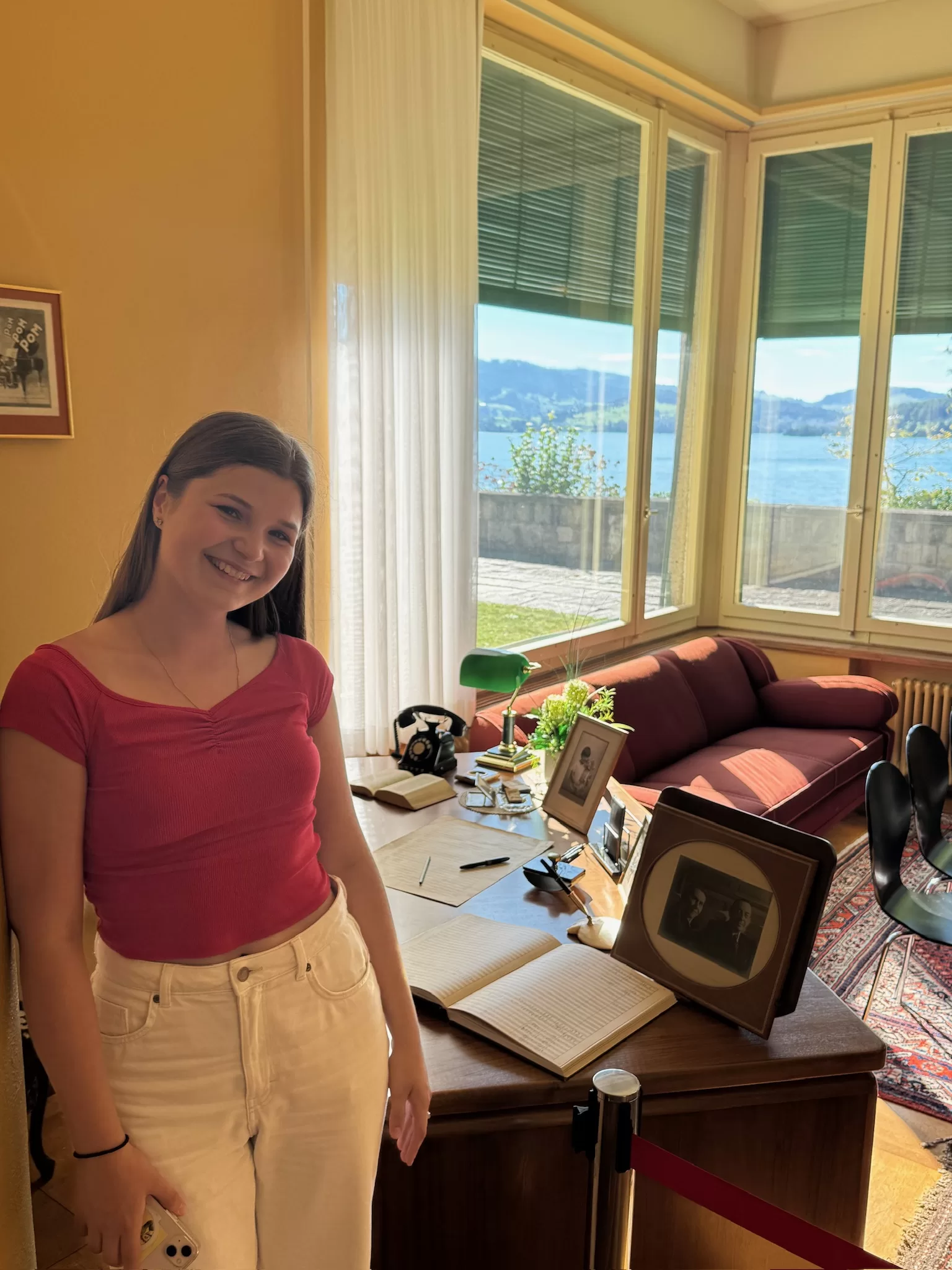
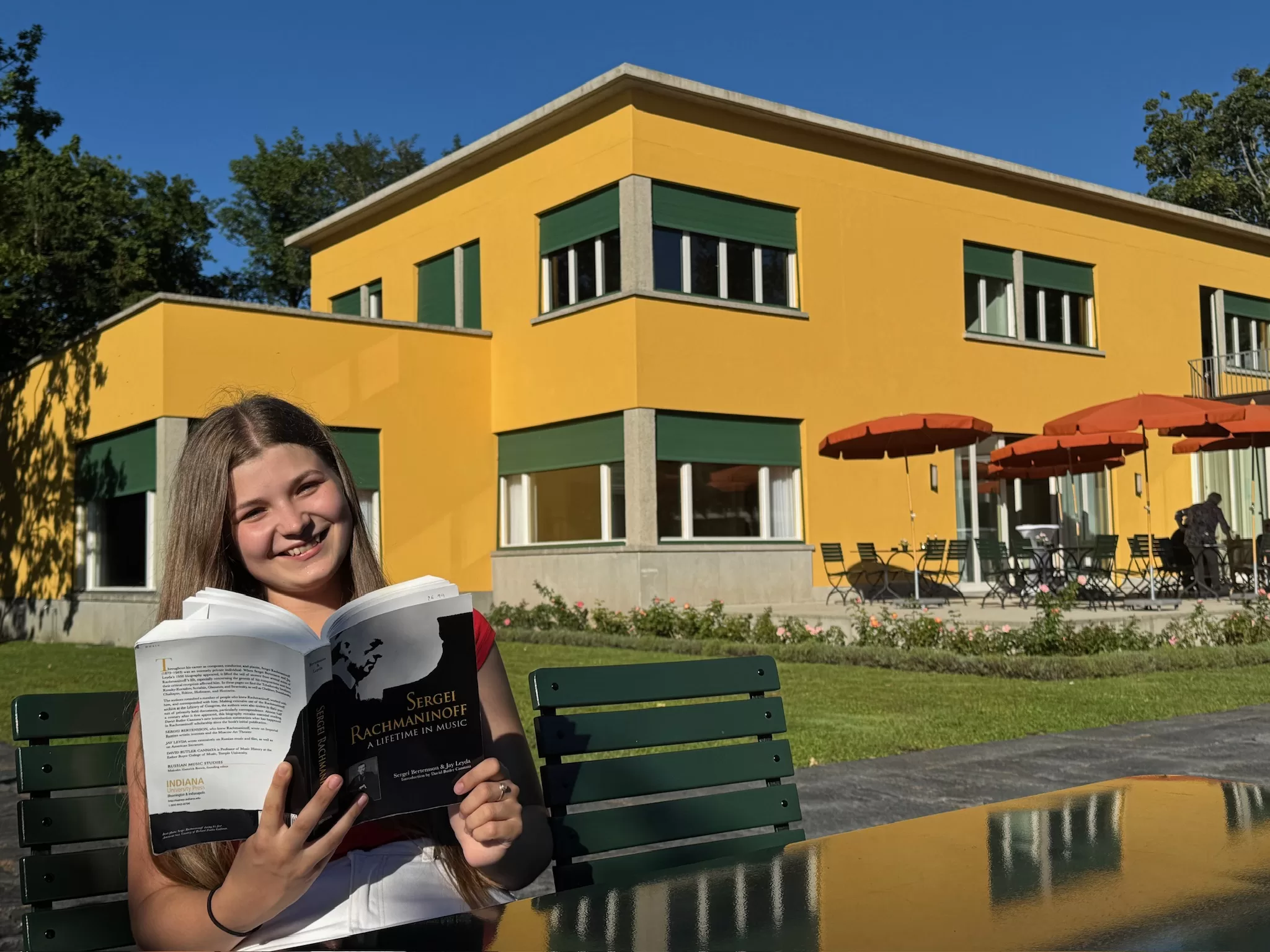
She returned to the academy inspired by the experience. Soon afterwards, her teacher, pianist and conductor Joanna MacGregor, asked whether she would like to perform the Rhapsody in Brighton. The stars had aligned and it was an easy yes.
MacGregor, who has been Mykhailichenko’s teacher at the Royal Academy of Music, is Music Director and CEO of the Brighton Philharmonic Orchestra and will conduct the performance. Mykhailichenko has never before performed a concerto with her teacher conducting, but believes having someone she knows so well next to her on the stage may bring a sense of stability when the inevitable stage adrenaline arrives.
MacGregor has also played an important role in her continuing development, encouraging her individual voice and introducing her to new repertoire.
“She has also let me be who I am,” Mykhailichenko says, “and let me support that individual voice that I’m trying to develop and grow as a musician and as a pianist.”
For a performer whose childhood was devoted to music and whose career has already taken some remarkable turns, she remains reluctant to predict exactly where the next decade will take her.
Instead, she talks about continuing to explore – discovering repertoire, performing with orchestras, recording and, above all, enjoying music.
For now, though, there is one particular journey ahead: from Rachmaninoff’s lakeside villa in Switzerland to the Brighton Dome stage, where a pianist will encounter his Rhapsody for the very first time.
And, perhaps fittingly, she will do so with the teacher who helped open the next chapter of her musical life conducting from the podium.